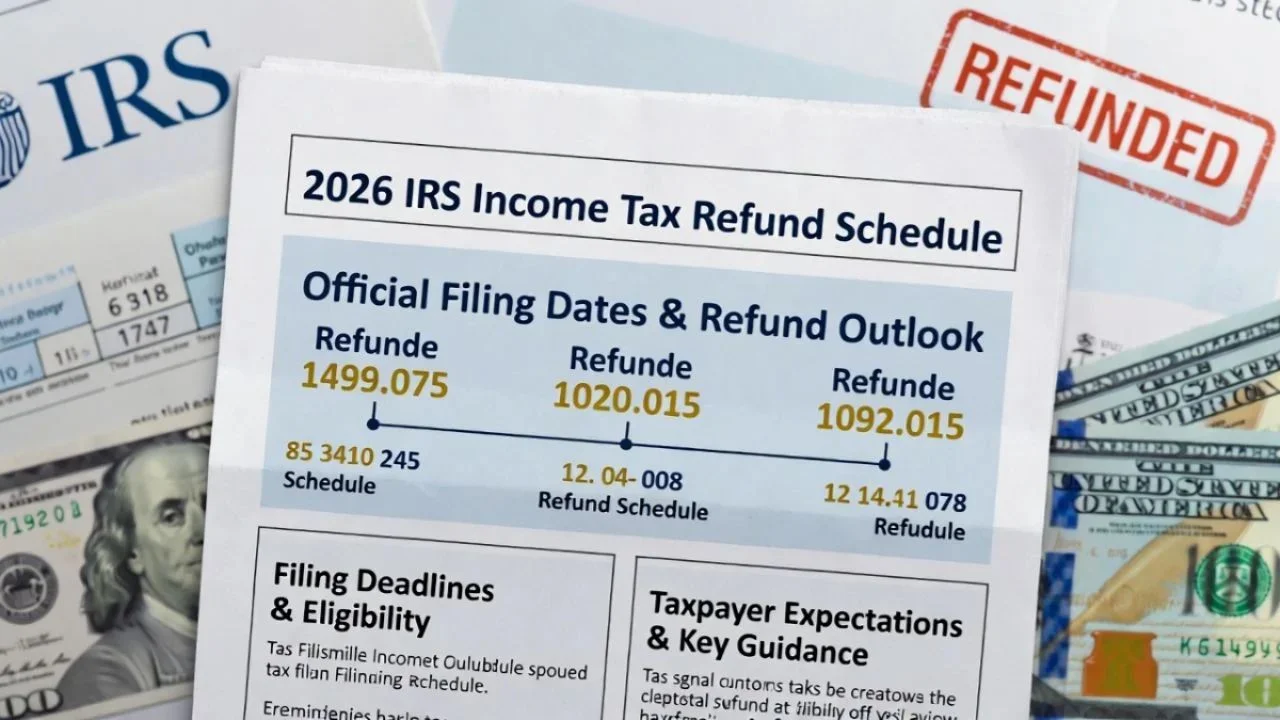
As the 2026 tax season approaches, many Americans are asking the same important question: when will IRS refunds arrive? For millions of households, a tax refund is not extra spending money. It is a financial lifeline used to catch up on bills, manage rising food and healthcare costs, or reduce debt. Because of this, the IRS refund schedule for 2026 plays a major role in how families plan their finances early in the year.
When the 2026 Tax Season Is Expected to Start
The Internal Revenue Service is expected to begin accepting federal tax returns for the 2025 tax year in late January 2026. Based on past patterns, the opening date is likely around January 27. It is important to understand that refund processing does not start when you prepare your return, but only after the IRS officially accepts it into their system.
How Long Refunds Usually Take
For taxpayers who file electronically and choose direct deposit, refunds are generally issued within 21 days after acceptance. Many simple returns are processed even faster, often within 10 to 14 days. However, this timeline is an estimate, not a promise. Paper-filed returns usually take much longer and may require six weeks or more due to manual handling.
Why Some Refunds Are Delayed
Refund delays often occur because of small errors or additional review requirements. Incorrect income details, mismatched Social Security numbers, or outdated bank information can slow processing. Returns flagged for identity verification must be reviewed before payment is released, which can add several weeks. Early-season filing can also be uneven as IRS systems match employer and financial reports.
Special Rules for Certain Tax Credits
Refunds that include the Earned Income Tax Credit or the Additional Child Tax Credit are legally required to be held until mid-February. Even if you file very early, these refunds are not released before that period. For the 2026 season, most of these refunds are expected to begin arriving around February 18, assuming there are no other issues.
Understanding Refund Amounts
A tax refund is simply the return of taxes you overpaid during the year. It is not a bonus. Refund size depends on income, family status, dependents, education costs, retirement contributions, and healthcare coverage. With pandemic-era credits now expired, some taxpayers may notice smaller refunds compared to previous years.
यह भी पढ़े:
 Social Security Spousal Benefits 2026: New Rules, Eligibility, Payment Amounts & How to Claim
How to Track Your Refund
The IRS “Where’s My Refund?” tool remains the most reliable way to monitor your refund. It updates daily and shows whether your return has been received, approved, or sent. Checking too frequently or submitting unnecessary changes can actually slow the process.
Final Thoughts on the 2026 Refund Season
For most people, the 2026 refund timeline will feel familiar. Many refunds will arrive within three weeks, while others may take longer due to credits or verification checks. Filing early, filing accurately, and using electronic options remain the best ways to avoid delays and reduce stress during tax season.
Disclaimer: This article is for informational purposes only and reflects historical IRS practices and publicly available guidance. Tax laws, refund timelines, and individual circumstances may change. Readers should consult the official IRS website or a qualified tax professional for advice specific to their situation.