As 2026 begins, people who rely on Supplemental Security Income (SSI) need to pay close attention to their payment schedule. A calendar rule is causing SSI payments to arrive early for two months in a row, which can be confusing if you are not prepared. At the same time, there is some relief for recipients because monthly benefit amounts are increasing due to a cost-of-living adjustment.
Why SSI Payments Sometimes Arrive Early
SSI payments are handled by the Social Security Administration and are normally sent on the first day of each month. However, when the first day falls on a weekend or a federal holiday, the payment is issued on the previous business day. This rule exists so that people who depend on SSI are not forced to wait longer for money they need to cover basic living expenses.
What Is Changing at the Start of 2026
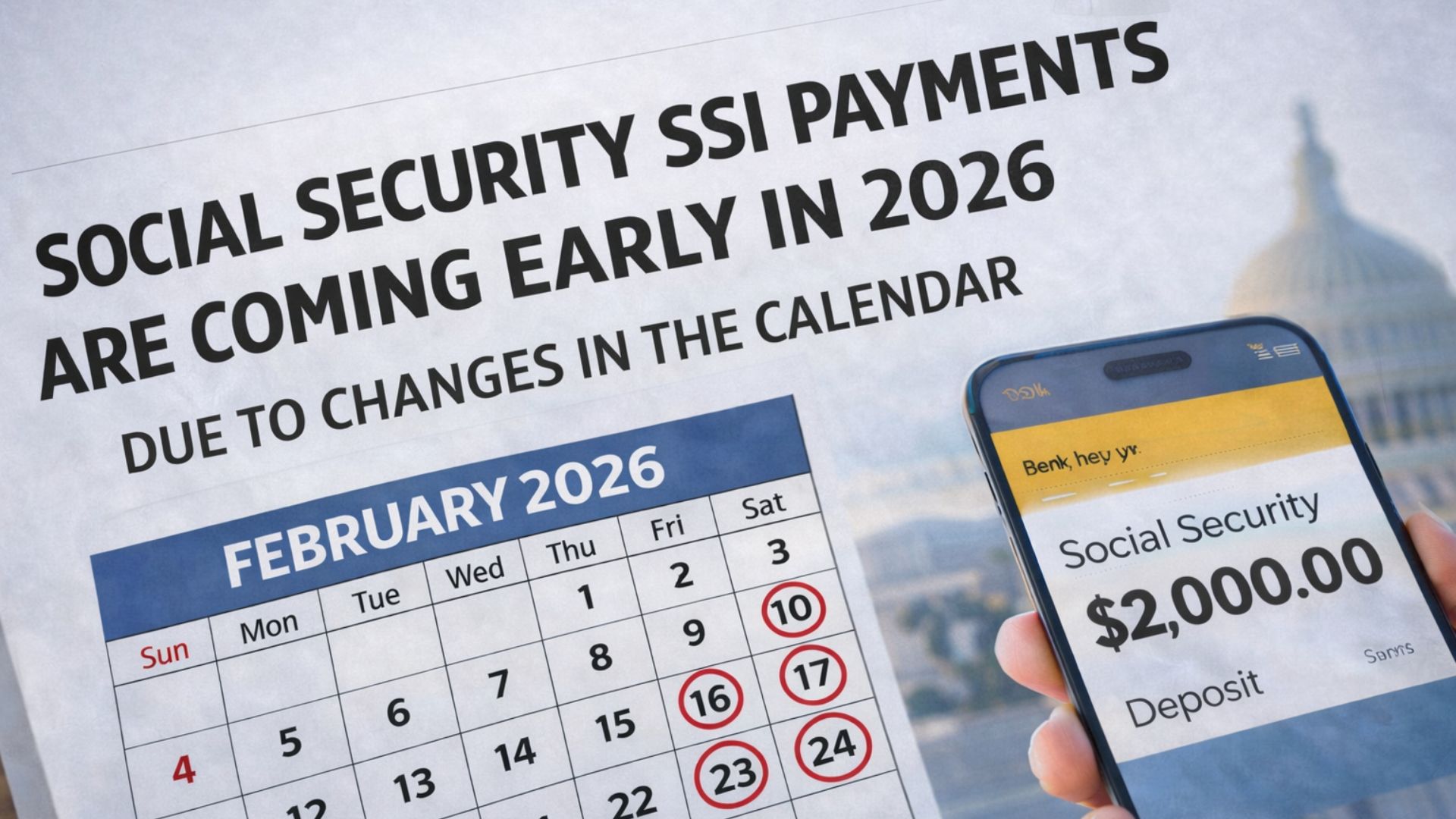
In early 2026, this rule applies twice in a short period. February 1 falls on a Sunday, so the February SSI payment will be deposited early on Friday, February 30. The same situation happens again the following month. Since March 1 also falls on a Sunday, the March SSI payment will arrive early on Friday, February 27. After that, the schedule goes back to normal, with the April payment arriving on April 1.

How Early Payments Can Affect Monthly Budgeting
Receiving payments earlier than usual does not mean extra money is being sent. It simply means the timing has shifted. This can create challenges for budgeting, especially for people who plan expenses around monthly payment dates. Knowing that there will be no separate SSI deposit on February 1 or March 1 helps prevent confusion and missed bill payments.
Higher SSI Benefit Amounts in 2026
Along with the payment timing changes, SSI recipients will also see higher monthly benefits in 2026. A 2.8 percent cost-of-living adjustment takes effect at the end of 2025 and applies to payments issued in the new year. This increase is meant to help benefits keep up with rising prices for essentials like food, housing, and utilities.
With this adjustment, the maximum federal SSI payment for an individual increases to $994 per month. For eligible couples, the maximum federal amount rises to $1,491 per month. Actual payments may vary depending on income, living arrangements, and state supplements.

Who Qualifies for SSI Benefits
SSI is a needs-based program for older adults, people who are blind, and individuals with disabilities who have very limited income and resources. Strict limits apply to both income and assets, although a primary home and one vehicle are usually excluded.
Why Staying Informed Matters
For millions of Americans, SSI is not extra income but a lifeline. Understanding early payment dates and benefit increases helps recipients manage rent, utilities, groceries, and medical costs more effectively and avoid unnecessary stress.
Disclaimer: This article is for informational purposes only and does not provide financial, legal, or benefits advice. SSI payment dates, eligibility rules, income limits, and benefit amounts are determined by the Social Security Administration and may change. Readers should refer to official SSA resources or contact the Social Security Administration directly for guidance specific to their situation.